by Allison Scott, CKBD, Director of Design, Nip Tuck Remodeling · Bellevue, WA
People often expect my list of places where wallpaper doesn’t work to be long. It’s surprisingly short. The more useful conversation is about where wallpaper truly shines, and what it takes to get it right.
Where We Love Wallpaper
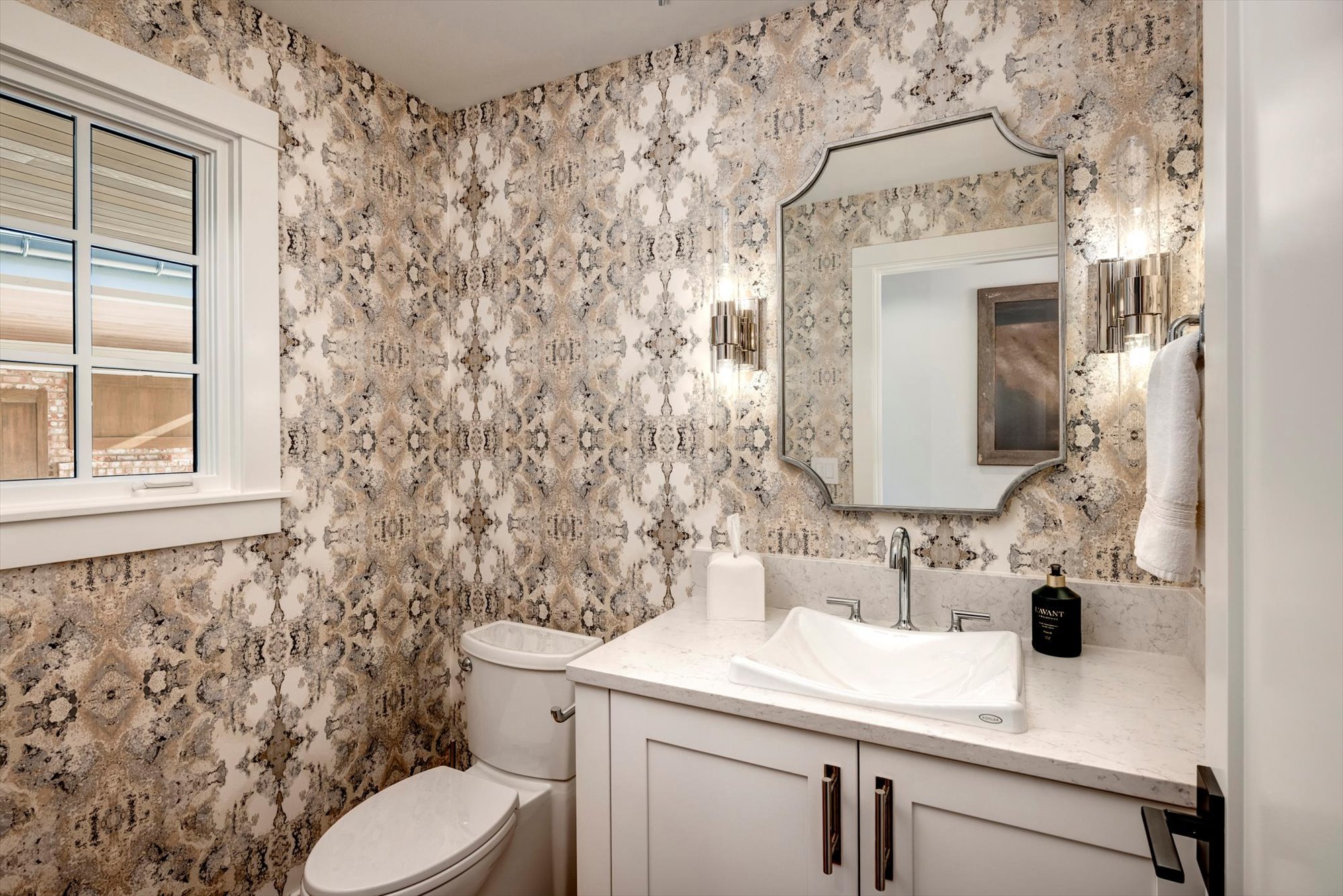
Powder rooms.
Every guest sees the powder room, and its small scale invites a bold choice. It’s one of my favorite places for wallpaper. Our 2026 bathroom trends article shows two Eastside powder rooms where pattern does the talking.
Rooms with supporting millwork or cabinetry.
Wallpaper is at its best when it isn’t the only thing happening in a room. Maybe there’s a wainscot below, paper set inside shadow-box panels, or substantial cabinetry nearby. Those elements balance the pattern, and the pattern brings warmth to the architecture.
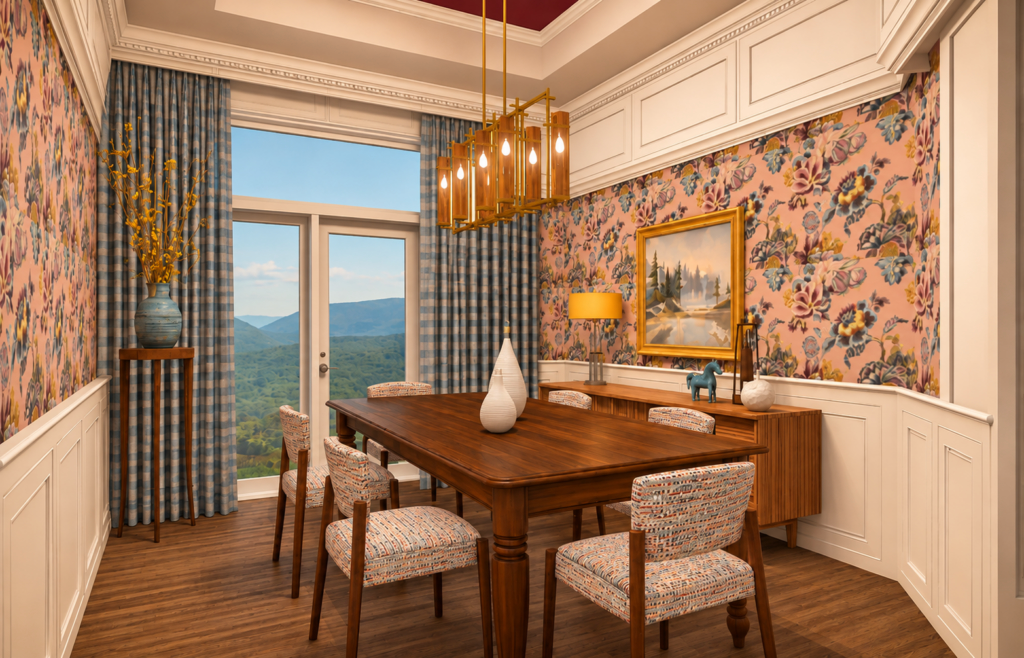
A recent Woodinville dining room shows exactly this. The home had very formal millwork: fluted columns, upper and lower wainscoting, and a formal window and door system. Whatever went on those walls had to meet that millwork on its own terms. We chose a medium-to-large-scale traditional floral on an unexpected blush background. The scale holds its own, and the color brings a surprise. The paper is so interesting that the heavy millwork no longer dominates, and the room finally reads as a whole. The homeowners love it.
Where We Don’t Love Wallpaper
Behind a range.
We won’t put traditional wallpaper behind a cooking surface. It’s a flammable material in the wrong place. Specialty wallcovering systems exist for kitchen walls, but that’s a separate conversation.
Closets.
Wallpaper can technically go in a closet, but I rarely see the value. That investment usually goes further somewhere you’ll see it every day.
What To Know Before You Choose
Dark papers show seams.
Most wallpapers are printed on white or light stock. We’ve installed deep greens and charcoal grays, and even with a meticulous installer and sharp tools, you should expect to see the seams on darker paper. They’re most visible where a seam runs through a solid block of color. Lighter colors and patterns with organic, flowing shapes that cross the seams hide them best.
Natural grasscloth shows every seam.
Because no two natural fibers are alike, each one takes dye a little differently. Panels typically run 20.8-24 inches wide, so you’ll see a seam at roughly that interval. That variation is part of grasscloth’s character, and it helps to expect it going in.
Textured walls need preparation.
A heavily textured wall usually needs a skim coat, a liner layer, or both before the finished paper goes on.
When To Talk to Us About Wallpaper in Your Home
We’d always rather hear about wallpaper during planning, so any preparation can be built into the schedule from the start. That said, wallpaper can usually be added at any point, even after the remodel is complete.
A well-chosen wallpaper finishes a room in a way paint can’t. Curious what’s changed in wallpaper itself? Read “Wallpaper Is Back — and This Time It’s Different.”
If you’re considering wallpaper for a home in Bellevue, Redmond, Woodinville, Sammamish, Medina, or Clyde Hill, we’d love to help you find the right fit. Reach our team at NipTuckRemodel.com or 425-645-9625.